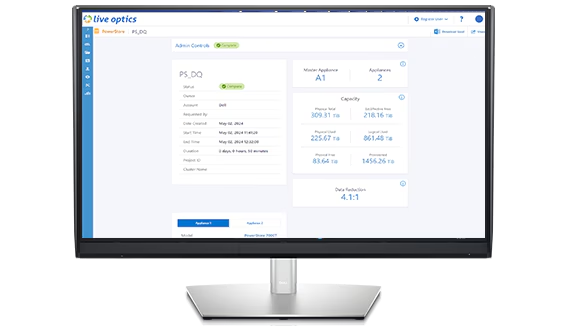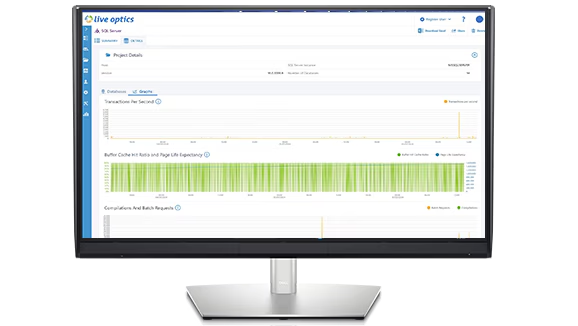
To measure is to know. Even in your data center.
Infrastructure decisions should be based on facts, not assumptions. How are your systems actually being used, how heavily are they loaded, and where is capacity being wasted? That often remains invisible. Live Optics makes usage within your data center measurable. Nalta provides the scan free of charge and without obligation: we configure the platform, analyze the output, and translate the data into concrete advice.

"What should we do with our infrastructure now?"

A question Nalta hears regularly. Hardware ages, licenses expire, a migration to the cloud is on the agenda, or the organization is growing faster than the infrastructure can handle. Meanwhile, the IT department makes decisions based on what it thinks it knows. But assumptions are expensive. Over-provisioning costs money. Under-provisioning costs performance and continuity. Migrating without insight into the actual workload is a risk that can be avoided.

Hardware shortages make proper sizing essential

In the past, if you were in doubt, you simply added a few extra drives. A small margin, just to be safe, and you wouldn't have to think about it for the next five years. Due to persistent hardware shortages and sharply increased prices, that margin is no longer a small buffer, but a significant expense. A few extra drives can quickly add up to thousands or even tens of thousands of euros. That is exactly why measuring properly before you size is more relevant than ever. That is where Live Optics comes in.

What is Live Optics?

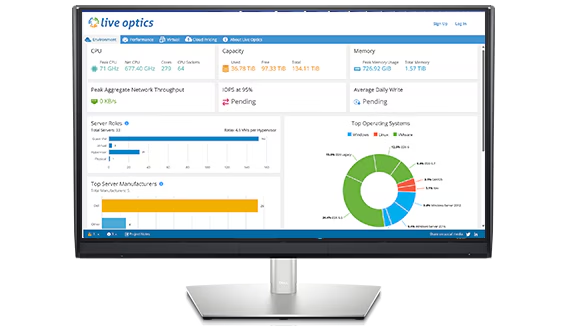
Dell Live Optics is an analysis platform from Dell Technologies that maps the actual performance of an IT environment. The platform collects live data from servers, virtual machines, and storage over a representative measurement period, and presents that data in a clear report. No estimates, no assumptions. Just a factual picture of CPU usage, memory consumption, storage capacity, IOPS, and network throughput.

Organizations use Dell Live Optics for:
Sizing new infrastructure
How much capacity do you actually need? Live Optics shows you, without over- or under-provisioning.
Migrations to cloud or new hardware
What needs to move, what can be downsized, and what should be retired? Facts make migration decisions better.
Insight into daily resource usage
Which systems are overloaded? Where are you paying for capacity you aren't using?

From measurement to advice in three steps

Data collection
Nalta installs the Live Optics Collector on a VM or server in your environment. The Collector measures the actual behavior of your systems: physical servers, virtual machines via vCenter, and storage. The measurement runs for at least 24 hours to capture the peak moments that truly matter: users logging in simultaneously, batch processes running, and overnight backups. These specific moments determine what your environment needs, not the average.
Data processing in a project
The measurement data is consolidated into a Live Optics project. Multiple collectors can be combined, providing a complete overview of even complex environments with different segments. The project contains all raw measurement values, ready for analysis.
Analysis and advice by Nalta
This is where Nalta’s added value begins. The portal generates an AIR (Automated Insights Report) containing charts, statistics, and workload profiles for each VM and host. Nalta analyzes this report, identifies correlations, and flags anomalies. The result: concrete advice on what needs to be replaced, expanded, or downsized.
Data collection
Nalta installs the Live Optics Collector on a VM or server in your environment. The Collector measures the actual behavior of your systems: physical servers, virtual machines via vCenter, and storage. The measurement runs for at least 24 hours so that both peak and off-peak hours are captured. The data is automatically uploaded to the Live Optics portal. If there is no internet connection, the Collector exports the data locally as an SIOKIT file.
Processing data in a project
The measurement data is consolidated into a Live Optics project. Multiple collectors can be combined, ensuring that even complex environments with different segments are fully mapped. The project contains all raw measurement data, ready for analysis.
Analysis and advice by Nalta
This is where Nalta's added value begins. The portal generates an AIR (Automated Insights Report) with charts, statistics, and workload profiles per VM and host. Nalta analyzes that report, identifies correlations, and flags anomalies. The result: concrete advice on what needs to be replaced, expanded, or downsized.

What are the benefits?

No assumptions. Just insights.
Performance insights
CPU load per server and VM, including averages and peaks. Memory usage over time. Network throughput that reveals where bottlenecks are located.
Capacity analysis
Used versus available storage. Overprovisioning of VMs that costs you money unnecessarily. IOPS profiles that show how heavily your storage is actually being taxed.
Workload profile
How many VMs are running, what is their average size, and which systems are the outliers? With that information, you can plan effectively for replacement, migration, or expansion.
Targeted advice from Nalta
The knowledge to interpret the output and translate it into sound infrastructure choices—that is where Nalta makes the difference.

The platform. The expertise. The advice.

A report full of charts is only valuable if someone knows what to look for. Nalta is a Platinum Dell partner and uses Live Optics as part of a broader infrastructure advisory process. We install and configure the platform, monitor the measurements, and ensure the right systems are included. Afterward, our specialists analyze the output, discuss the findings with you, and provide clear advice: replace, expand, downsize, or migrate.

If that advice leads to a next step, we guide you through that as well. Clients like JR Shipping and Koopman rely on this approach. Not because the platform itself is so special, but because the advice that results from it makes the difference.

What exactly does Live Optics measure?

The Collector runs in your environment and accesses your systems. It is a logical question: what does it see? Dell Live Optics exclusively collects metadata regarding system behavior. The platform measures how hard your systems are working, much like a blood pressure monitor: it measures how fast your heart is beating, but knows nothing about what you ate yesterday.

For organizations with strict compliance requirements: Nalta is ISO 27001 and ISAE 3402 Type 2 certified. Security is not an afterthought; it is the foundation.
What is excluded?
Files
User data
Company-sensitive information
What is included?
CPU cycles
Memory usage
I/O patterns
Network throughput

Frequently asked questions about Live Optics

What is Live Optics?

Dell Live Optics is a Dell Technologies platform used to measure the actual performance of an IT environment. The platform collects live data from servers, VMs, and storage, and presents it in an Automated Insights Report (AIR). Organizations use it for infrastructure sizing, migration projects, and capacity planning.

How long does a Live Optics measurement take?

A standard measurement takes at least 24 hours. To get a representative picture that includes both peak moments and quiet periods, a measurement period of several days is recommended. Nalta will determine the optimal measurement duration with you based on your environment and specific requirements.

What does a Live Optics assessment cost?

The Live Optics scan itself is free and completely non-binding. Nalta handles the setup, measurement, and analysis, resulting in concrete advice – with no costs or obligations. You only pay if you decide to take the next step with us.

Which systems can Live Optics measure?

Live Optics measures physical servers, virtual environments via VMware vCenter, and storage systems. The Collector runs on a Windows VM or server and requires network access to the systems being measured.

What happens to the collected data?

The data is automatically uploaded to the secure Dell Technologies Live Optics portal. If no internet connection is available, the Collector exports the data as a local SIOKIT file that can be uploaded manually. Live Optics only collects metadata regarding system behavior. No files or user data are collected.

When is a Live Optics assessment useful?

An assessment is valuable if you are considering migrating to a different infrastructure or cloud, if you want to purchase new hardware and are unsure how to size it, if you suspect your current environment is over- or under-provisioned, or if you want insight into the actual resource usage of your data center. The scan also provides the data to support your decisions when you want to bring workloads back from the cloud—for example, due to costs, performance, or data sovereignty (maintaining control over your own data under European law).

What does Nalta do that I can't do myself?

In principle, you can install the platform yourself. However, the real value lies in the interpretation: which VMs are the outliers, what does that IOPS pattern mean for your storage choice, and how do you translate CPU spikes into sizing advice for new hardware? That requires experience. Nalta has that experience, is a certified Dell Platinum partner, and combines the platform's output with knowledge of your specific situation.

Do you want to know what is really happening in your environment?

A Live Optics assessment provides a quick, factual overview of your infrastructure. Nalta guides you through the entire process, from measurement to advice. Request a free scan.